
Heat, Humidity and Air Pollution – A Deadly Combination
The one good thing we can say about the drought: it’s reduced humidity. But a high above 90°F still puts us in the Extreme Caution section of the National Weather Service heat index. That’s the prediction for the rest of this week.
Even though we have had some time to acclimate to higher temperatures, this extreme weather can tax the most fit of us. We need to take extra precautions to stay safe in these extreme conditions.
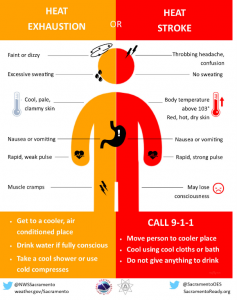 Smoke from wildfires and high pollution (ozone) levels add to the stress. That smoke is putting air pollution levels into the unhealthy category. As of Tuesday, July 25th, the Minnesota Pollution Control Agency (MPCA) has issued an Air Quality Alert for northern and central Minnesota that will last until Thursday, July 27th. Anyone with respiratory issues, such as asthma or allergies, could be more prone to health issues, including strokes.
In a warm environment, the human body relies on its ability to release heat through sweat and increased blood flow to the skin. Extremely hot weather prevents our bodies from being able to release this heat quickly enough. That’s worse when it is humid because the air cannot absorb as much of our sweat. This results in symptoms such as thirst, irritability, rashes, cramping, heat exhaustion or heat stroke.
Heat related illnesses do not discriminate: they can affect anyone of any age or physical condition. Be aware of the signs and symptoms of heat related illnesses. Look out for each other – employees may not realize they’re suffering from the heat until it becomes a medical emergency. If you see anyone displaying any symptoms, act accordingly.
Working consecutive days in the heat, especially when performing strenuous work, puts workers at an increased risk for these heat illnesses. Both those working outside and those working inside in areas without air conditioning can become ill. Because of this, breaks should be taken in the shade and in air-conditioned areas. Exposure to air conditioning for even a few hours a day will reduce the risk of heat related illness.
Keep your employees safe from heat by:
- Giving frequent breaks (in air-conditioning!)
- Slowing the pace of work
- Making sure workers stay hydrated and are not skipping meals.
- Supplying electrolyte beverages, electrolyte freeze pops and cooling towels.
- Dressing for the heat – lightweight, moisture-wicking, loose clothing.
Heat Related Illnesses:
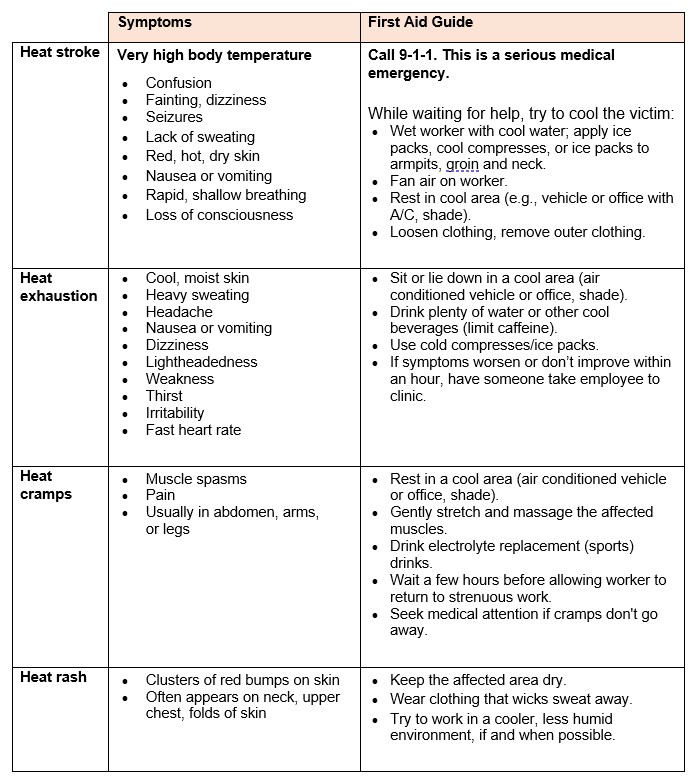
Remember: Water. Rest. Shade.
When planning outdoor work activities, follow the OSHA heat index (HI) guidelines.

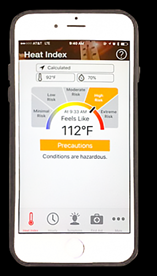 Consider using the OSHA-NIOSH Heat Safety Tool as a resource to help you determine which work activities are safe based on the current weather conditions. This app displays the real-time heat index, hourly forecasts and occupational health and safety recommendations.
OSHA-NIOSH Health Safety Tool features include:
- visual indicator of the current heat index based on your location
- Precautionary measures to take based on the current HI
- Hourly forecast of HI values
- Signs and symptoms and first-aid information for heat-related illnesses
For more information on staying safe in this extreme heat, go to:
https://www.osha.gov/heat-exposure or https://www.cdc.gov/disasters/extremeheat/index.html
To download the OSHA-NIOSH Heat Safety Tool, go to:
https://www.cdc.gov/niosh/topics/heatstress/heatapp.html
To read more about the MPCA Air Quality Alert, go to:
https://www.pca.state.mn.us/air-water-land-climate/current-air-quality-conditions